Patients receiving treatments targeted to the network, rather than to nearby brain regions, experience larger improvements
Brain network responsible for Parkinson’s disease identified

Patients receiving treatments targeted to the network, rather than to nearby brain regions, experience larger improvements

Black Americans die younger than their white counterparts, with an estimated 1.63 million “excess” deaths having occurred between 1999 and 2020, according to research in the Journal of the American Medical Association. These excess deaths are predominantly attributable to chronic conditions such as heart disease and cancer. In a new study published in JAMA Network Open, researchers at […]

Capital accelerates commercialization of WashU discoveries into life-changing diagnostics, therapeutics and medical devices

What makes someone a “morning lark” or a “night owl?” Why does jet lag hit us so hard, and why do some people struggle each winter with seasonal affective disorder? Clues to these puzzles may lie in a tiny brain region called the suprachiasmatic nucleus (SCN), the body’s central circadian pacemaker. The SCN contains thousands […]

NIH), to examine how early-life stress on the developing brain can influence brain aging and the progression of neurodegenerative diseases such as Alzheimer’s. Adverse circumstances in the first years of life — such as low birth weight, poverty, unsafe living conditions and exposure to trauma — are known to alter the development of certain brain […]

Every function in a cell is associated with a particular protein or group of proteins, typically in a well-defined three-dimensional structure. However, intrinsically disordered regions of proteins defy this structure-function paradigm. A team of researchers in the McKelvey School of Engineering at Washington University in St. Louis has developed an algorithm to understand how intrinsically […]

When doctors biopsy and treat cancer may be just as important as how they treat it. New research from Erik Herzog, PhD, the Viktor Hamburger Distinguished Professor in biology in Arts & Sciences at Washington University in St. Louis, revealed that when a treatment is given may play a key role in how well brain cancer […]

The most common type of brain tumor in children, pilocytic astrocytoma (PA), accounts for about 15% of all pediatric brain tumors. Although this type of tumor is usually not life-threatening, the unchecked growth of tumor cells can disrupt normal brain development and function. Current treatments focus mainly on removing the tumor cells, but recent studies […]

The itching, redness and swelling of an allergic reaction are caused by mast cells — the vigilant first responders of the immune system that spring into action with histamine-filled granules in response to a perceived threat. Now, researchers at Washington University School of Medicine in St. Louis have revealed that the same cells that cause misery […]

The fatigue and lack of motivation that many cancer patients experience near the end of life have been seen as the unavoidable consequences of their declining physical health and extreme weight loss. But new research from Washington University School of Medicine in St. Louis challenges that long-held assumption, showing instead that these behavioral changes stem […]

A newly developed blood test for Alzheimer’s disease not only aids in the diagnosis of the neurodegenerative condition but also indicates how far it has progressed, according to a study by researchers at Washington University School of Medicine in St. Louis and Lund University in Sweden. Several blood tests for Alzheimer’s disease are already clinically […]

Clinical trial of people destined to develop early-onset Alzheimer’s disease shows eliminating amyloid from brain may prevent symptoms, supports need for confirmatory studies

Washington University School of Medicine in St. Louis has received a three-year $4.5 million grant from the Carol and Gene Ludwig Family Foundation, aimed at advancing research on neuroimmunology and neurodegeneration with the ultimate goal of developing new treatments for Alzheimer’s disease. Administered by WashU Medicine’s Brain Immunology & Glia (BIG) Center, the Carol and Gene […]

Washington University School of Medicine in St. Louis has launched the Center for Rare, Undiagnosed and Genetic Diseases, supported by an $8.5 million grant from Children’s Discovery Institute (CDI), a partnership with St. Louis Children’s Hospital, St. Louis Children’s Hospital Foundation and WashU Medicine. The new center brings together WashU Medicine researchers and the rare […]

Remarkably, Doug Whitney, 75, has escaped genetic destiny. Like many members of his family, Whitney inherited a rare genetic mutation that all but guarantees he would develop early-onset Alzheimer’s disease. But Whitney, whose relatives first showed symptoms of cognitive decline in their early 50s, remains mentally sharp with no signs of the devastating disease, and […]

As a leading researcher of rare diseases that affect children’s brains, Jonathan D. Cooper, PhD, thought little about the gastrointestinal (GI) system. That is, until the parents of children with a condition that Cooper studies urged him to investigate why debilitating digestive issues troubled their kids, who suffer from an incurable and fatal neurodegenerative brain condition […]

Researchers at Washington University School of Medicine in St. Louis have been awarded $7.5 million from the National Institutes of Health (NIH) to investigate a form of dementia caused by cerebral small vessel disease, the second-leading cause of dementia after Alzheimer’s disease. The grant funds the Vascular Contributions to Cognitive Impairment and Dementia (VCID) Center, […]

Andrew Taylor, an emeritus trustee of Washington University in St. Louis, and his wife, Barbara, have made a $50 million gift to WashU Medicine’s neurosurgery department to enhance groundbreaking research, innovative patient care and the training of the next generation of neurosurgery leaders. In recognition of the Taylors’ generosity, the department has been named the Taylor […]

Virtually every cell in the human body has an internal clock. These clocks take their cues from a central clock in the brain. In a normal, biological process called synchrony, the central clock coordinates daily rhythms around the body, so that every cell and tissue recognizes the same external time of day. Knowing local time […]

Alzheimer’s disease and frontotemporal dementia are devastating disorders that emerge following the buildup of misfolded proteins in the brain. The newest generation of Alzheimer’s therapeutics targets accumulations of the protein amyloid beta with engineered antibodies, but the results have been underwhelming, with some adverse effects, not to mention using engineered antibodies can be prohibitively expensive. […]

Strategy involves placing targets on deadly cancer’s cells, potentially making them vulnerable to immunotherapies

Harnessing this process may offer therapies for neuroinflammatory diseases such as MS, mouse study suggests

When trying to understand how genetic influences factor into youth behavior, researchers at Washington University in St. Louis have taken the “big trawl” approach, casting their net wide to pull in all the measured traits, behaviors and environments that make up who we are and examine associations with the genetic building blocks comprising risk for […]

Findings could point to new strategies to treat Alzheimer’s

With new technique, patient-derived neurons accurately model late-onset Alzheimer’s, point to potential treatments

Head-to-head comparison of six tests reveals which ones could replace spinal taps, brain scans

Scientists are trying to understand how cannabis may affect long-term neurodevelopment when people were exposed to it in the womb. Previous work by Washington University in St. Louis researchers Sarah Paul and David Baranger in the Behavioral Research and Imaging Neurogenetics (BRAIN) lab led by Ryan Bogdan, PhD, found associations between prenatal cannabis exposure and potential mental health conditions in childhood […]

Roughly one in five cancer patients benefits from immunotherapy – a treatment that harnesses the immune system to fight cancer. Such an approach to beating cancer has seen significant success in lung cancer and melanoma, among others. Optimistic about its potential, researchers are exploring strategies to improve immunotherapy for cancers that don’t respond well to […]

Gift from Andy Newman supports world-changing research on the gut microbiome
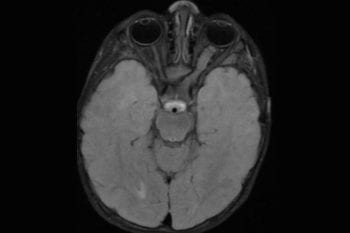
Study lays groundwork for clinical trial aimed at preventing brain tumors in children with NF1
Researchers aim to create treatment that promotes tissue regeneration, restores joints
There lies a paradox in sleep. Its apparent tranquility juxtaposes with the brain’s bustling activity. The night is still, but the brain is far from dormant. During sleep, brain cells produce bursts of electrical pulses that cumulate into rhythmic waves — a sign of heightened brain cell function. But why is the brain active when we […]
Could make early Alzheimer’s diagnosis, treatment accessible to more people

Breaking link between early, late stages of disease may prevent dementia

Findings could guide recommendations for treating, preventing childhood malnutrition
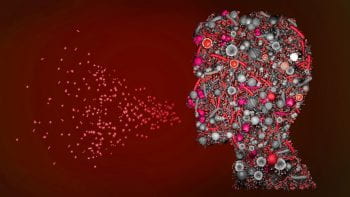
Chakrabarty, Cirrito to develop test with $3.6 million grant from Flu Lab
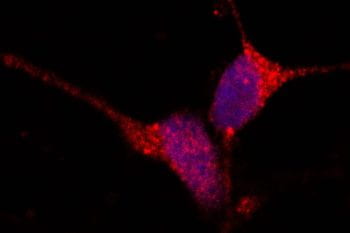
Key steps leading to such accumulation identified; could inform new therapeutic approaches

Washington University involved in clinical trials, will offer drug in collaboration with BJC HealthCare

Accurate diagnosis is a crucial step toward appropriate treatment

Alzheimer’s proteins rise sharply in response to stress in female mice

Findings point to brain areas that integrate planning, purpose, physiology, behavior, movement

Findings, in mice, open up drug development possibilities for brain diseases linked to tau protein

For older adults with clinical depression that has not responded to standard treatments, adding the drug aripiprazole (brand name Abilify) to an antidepressant they’re already taking is more effective than switching from one antidepressant to another, according to a new multicenter study led by Washington University School of Medicine in St. Louis. Aripiprazole originally was […]
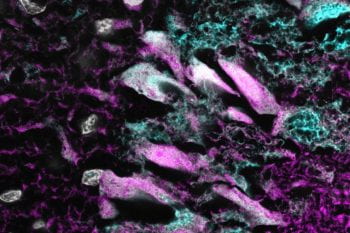
New imaging technique reveals circulation patterns in developing brain

Findings suggest new approach to treating Alzheimer’s, other neurodegenerative diseases

Focus is on therapies for Alzheimer’s, other neurodegenerative diseases

Successful cancer treatment approach extended to autoimmune disease
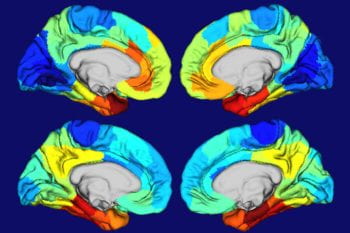
Findings could help explain rare symptoms such as problems with language, vision

Findings in mice suggest new therapeutic approach to Alzheimer’s, other age-related diseases
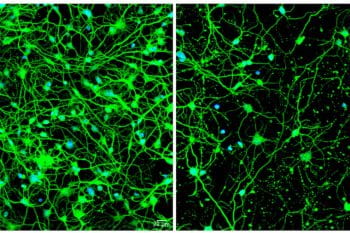
Neurons made from Huntington’s disease patients’ skin cells shed light on cognitive decline